

- The photographer is a teenager
- Her work spans six years, documenting her life beginning at age eleven through present day – she turned seventeen last month
- The photographs are (primarily) portraits of teenagers – her friends and herself
- Bee shares her work publicly via multiple media outlets (flickr, website, blog, twitter)
- Bee is popular – thousands subscribe or visit her sites
- Bee is represented by an artist’s agent and has been hired by corporations (Nike, Converse) for professional photography shoots.


Leslie Grinner – SCWA(A)MP In other words - and using Grinner's dominant ideological framework - Olivia Bee’s pictures are populated with straight, Christian, white, able-bodied, (American), male, property-holding subjects. There are only a handful of photographs (>10 out of thousands) depicting non-white or non-straight teenagers, and while there are many female teenagers in her work, the majority of the subjects are male. While Portland is less diverse than similarly sized U.S. cities, its non-white population at 22% is not represented in her photographs. Olivia Bee started – and to many extents still is – documenting her community and lifestyle. Does she have a responsibility to produce anti-racist, queer-friendly, pro-female imagery? Is she simply representing her own life as it is populated? Should her photographs be viewed as art, as distinct from media?
Rebecca C. Raby, A Tangle of Discourses: Girls Negotiating Adolescence
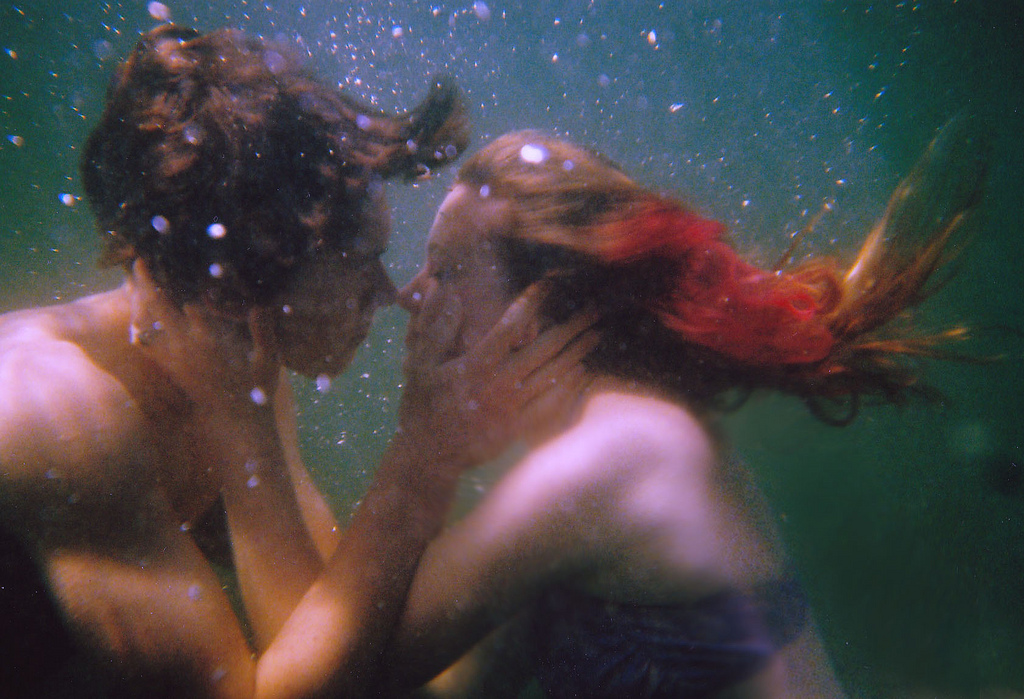
Raby identifies five prominent teenage discourses that have been applied to the teenage experience (storm, becoming, at-risk, social problem, pleasurable consumption). Primarily, Olivia Bee's photography invoke becoming and downplay the other four. But I do think her photography does not fit neatly into these discourses - which is precisely Raby's point. Bee's photography avoids reducing the teenage experience to 'perceived discourses' and I think this is in large part because the producer is a teenager herself. To expand upon this notion that Bee's photographs rarely invoke stereotypical teenage discourses beyond becoming, I think this can also be criticized. Olivia Bee's photography invokes the magic of teenagehood - and ignores the difficulties that can be associated with being a teenager (social anxiety, consumption, insecurity, sharing time/space with parents, burgeoning sexuality and activity, bullying) - in a way that makes her work heartening but misleading as an accurate portrayal of her life. Olivia Bee's Commercial Work I think it is a combination of the storm-less magical teenage world - inhabited by subjects adhering more or less to dominant ideology standards as outlined by SCWAMP - that makes Bee's work marketable. 
 |
| CONVERSE |
 |
| CONVERSE |
 |
| NIKE |
David Croteau, Media and Ideology
The media give us pictures of social interaction and social institutions that, by their sheer repetition on a daily basis, can play important roles in shaping broad social definitions. In essence, the accumulation of media images suggests what is “normal” and what is “deviant.” (P 163)Olivia Bee's photographs - while challenging some of the more popular teenage discourses - do embody 'normalcy' as noted by Croteau. The photographs depict a slice of Americana that is saccharine, wholesome, and admirable to many. There is also the added bonus of the viewer experience the 'secret life' of the American teenager - the viewer sees them in their own habitat, unburdened by adults, school, work, or problems. While not purposely trying to add to the repetitive discourse of what is normal and what is deviant, by virtue of her work and time being purchased for dissemination by major media outlets, Olivia Bee becomes complicit in the act. The "normalcy" discourse is striking - particularly in her Nike photo shoot.
Recent Work Olivia Bee turned seventeen less that one month ago and her work has rapidly begun changing. Her work has been likened to Ryan McGinley, whose first solo show at the age of twenty-five at the Whitney depicted a "downtown neverland where people are thrilled and naked, leaping in front of graffiti on the street, sacked out in heaps of flannel shirts—everything very debauched and drug-addled and decadent, like Nan Goldin hit with a happy wand. Part of what made McGinley so famous (like Goldin before him) was that he offered not just an artist’s vision of a free and rebellious alternative life but also the promise that he was actually living it, through photos that looked spontaneous, stolen, of an intimate cast of characters, a family of friends." (New York Magazine, 7/7/07) The Whitney curator explained that McGinley's subjects, "are performing for the camera and exploring themselves with an acute self-awareness that is decidedly contemporary. They are savvy about visual culture, acutely aware of how identity can be not only communicated but created. They are willing collaborators." While Bee's friends have always been self-aware subjects in pictures, the activities she has been depicting now represent more of the 'deviant' as defined by Croteau and illustrate some aspects of Raby's seedier teenage discourses.


